The Heat Island in Your Own Backyard:
Why Concrete Retaining Walls Make Summer Hotter, and Living Walls Don’t
Every homeowner and landscaper knows the feeling: you walk past a concrete retaining wall on a summer evening, hours after the sun has set, and it’s still radiating heat like a stovetop that was turned off an hour ago. That’s not your imagination, it’s basic building physics, and it’s one of the most overlooked contributors to the “urban heat island effect” in cities, subdivisions, and even individual backyards.
For this post, we pulled together a synopsis of research and testing on urban heat accumulation and cited our sources in a technical document housed in our Support Docs on the Verdtech website. Plant covered structures, including living retaining walls have been studied around the world and much of that information can be found in this blog post. Since our passion is plantable retaining walls, we have conducted some simple temperature measurements on typical concrete modular block retaining walls and our own Varden™ Plantable Retaining Walls to make it fun and break up the research data a bit. The YouTube videos included below, show how typical landscapes can play a role in increasing or decreasing Urban Heat Islands in our own yards.
Why concrete gets, and stays, hot
Concrete is what engineers call a high-thermal-mass material. It absorbs enormous amounts of solar energy during the day and releases it slowly, over many hours, as the air around it cools. Wikipedia’s summary of urban heat island research puts a number on it: concrete can hold roughly 2,000 times as much heat as an equivalent volume of air. On a clear summer day, the sun delivers around 800 watts per square meter to a horizontal surface, and researchers at the CNRS have found that roughly half of that energy is absorbed by materials like concrete and released again after dark, enough, in dense cities like Tokyo, to add nearly another 2 degrees F to nighttime temperatures.
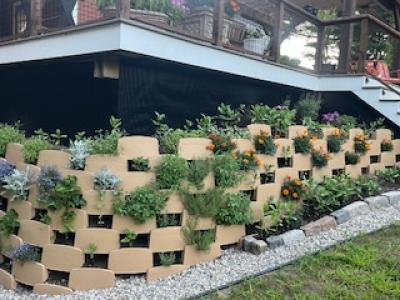
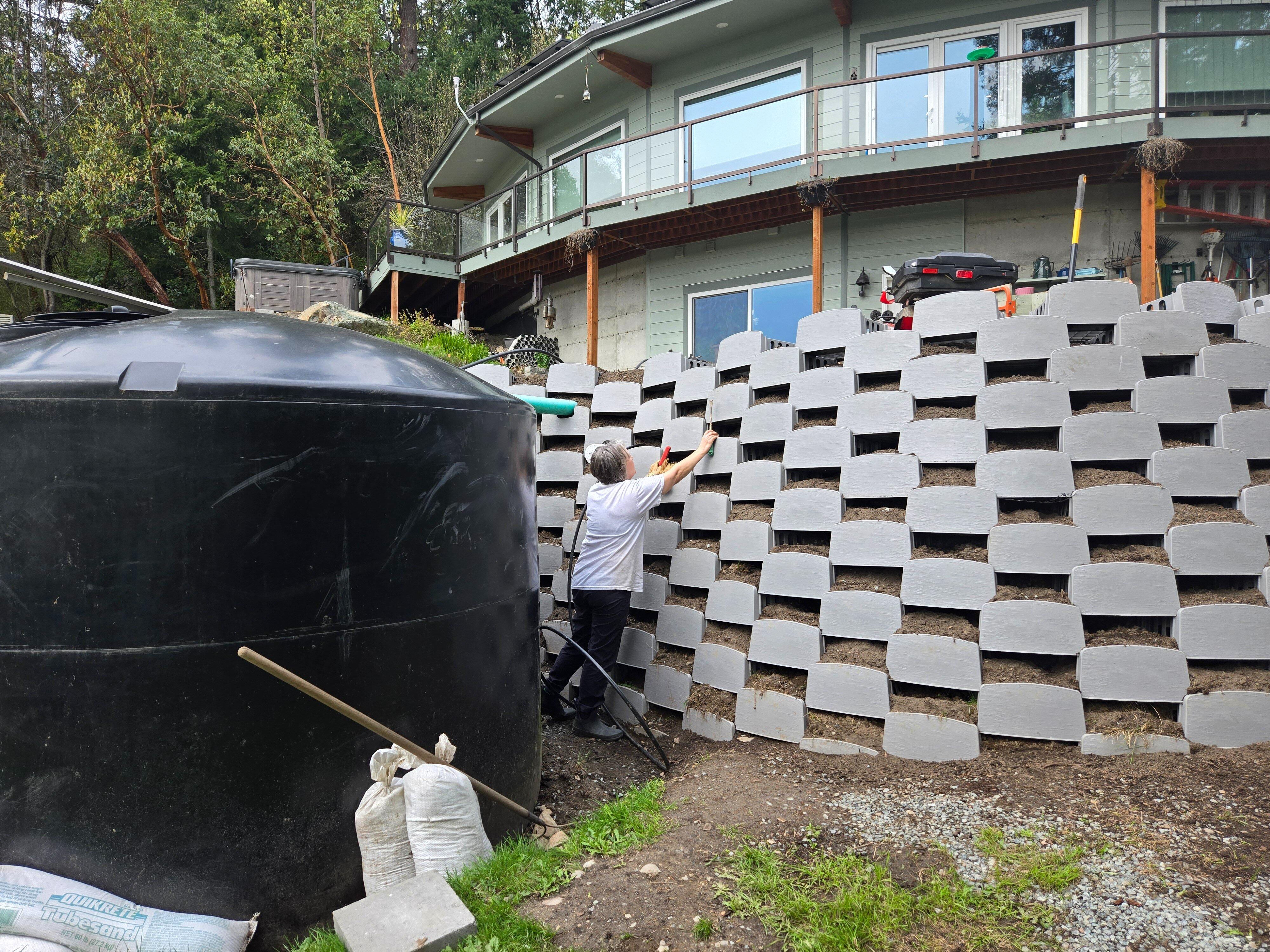
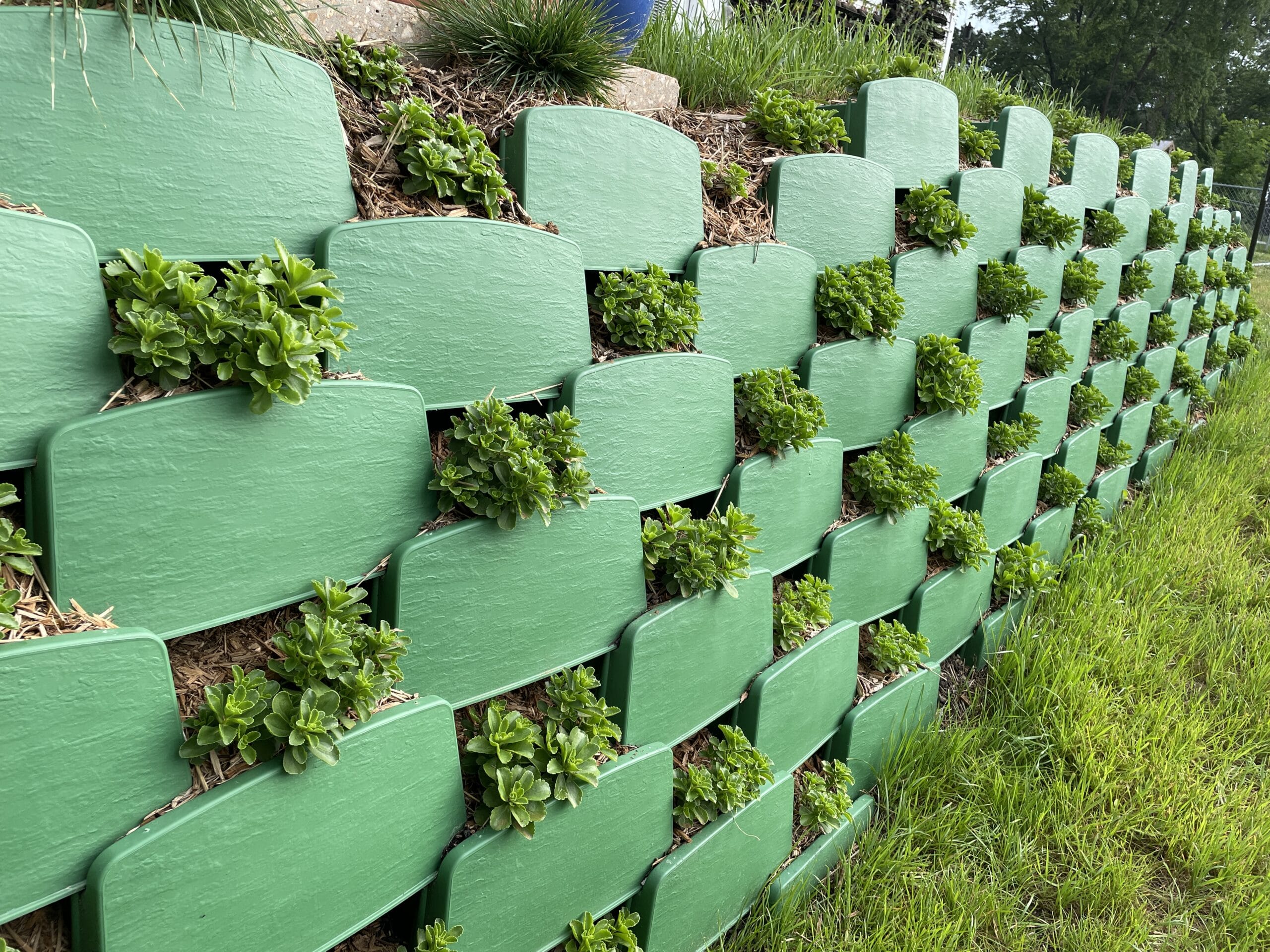
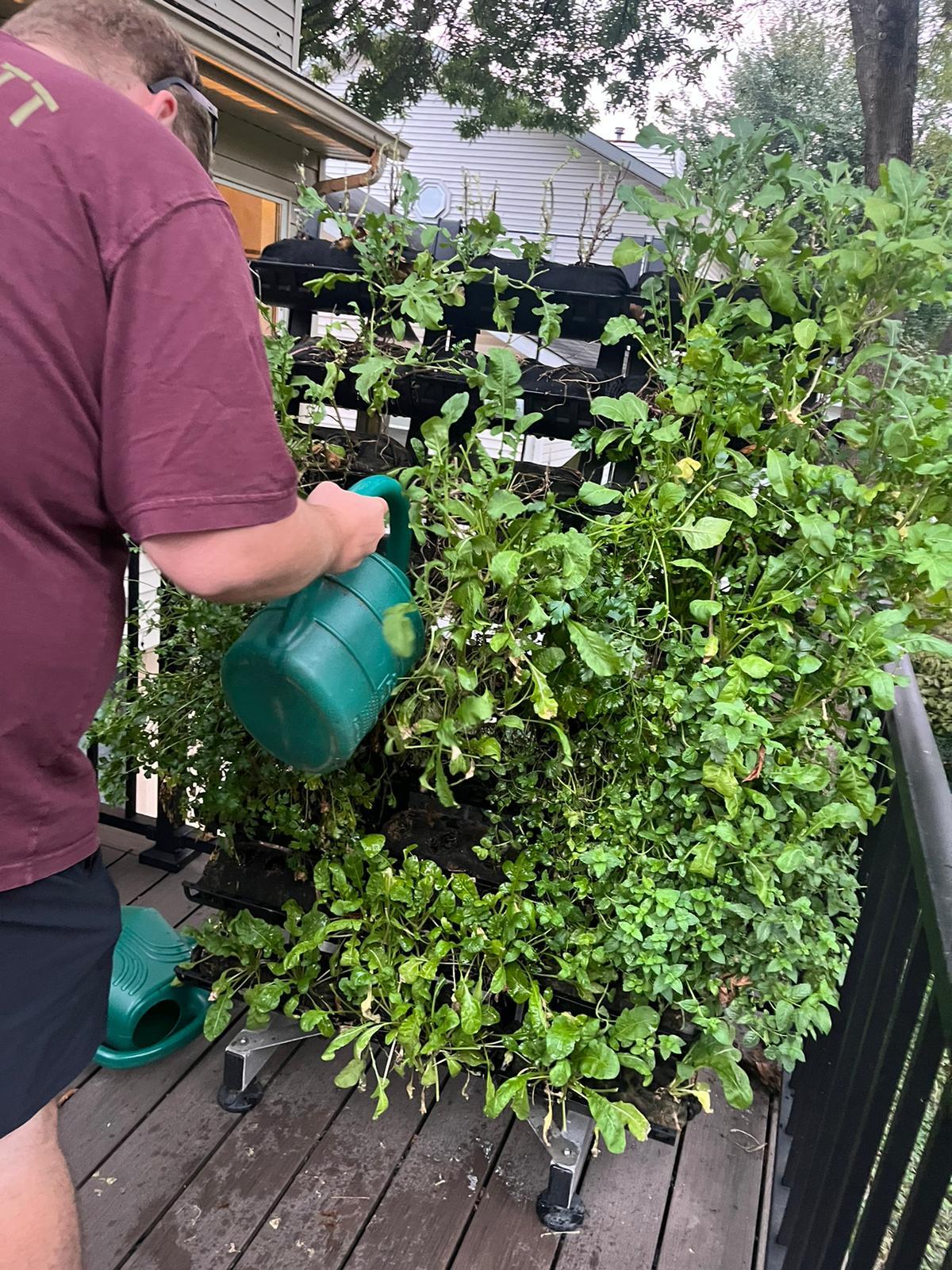
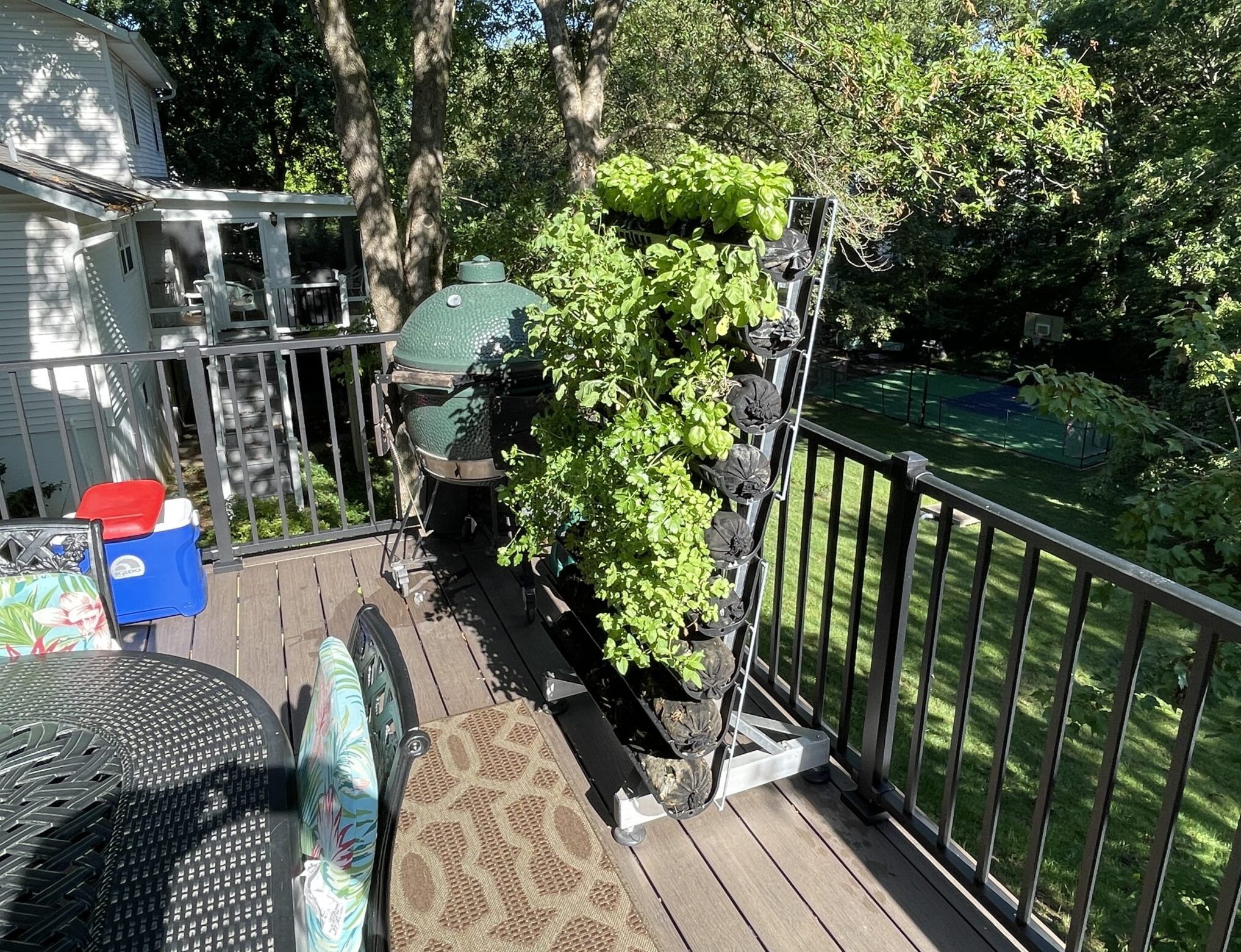
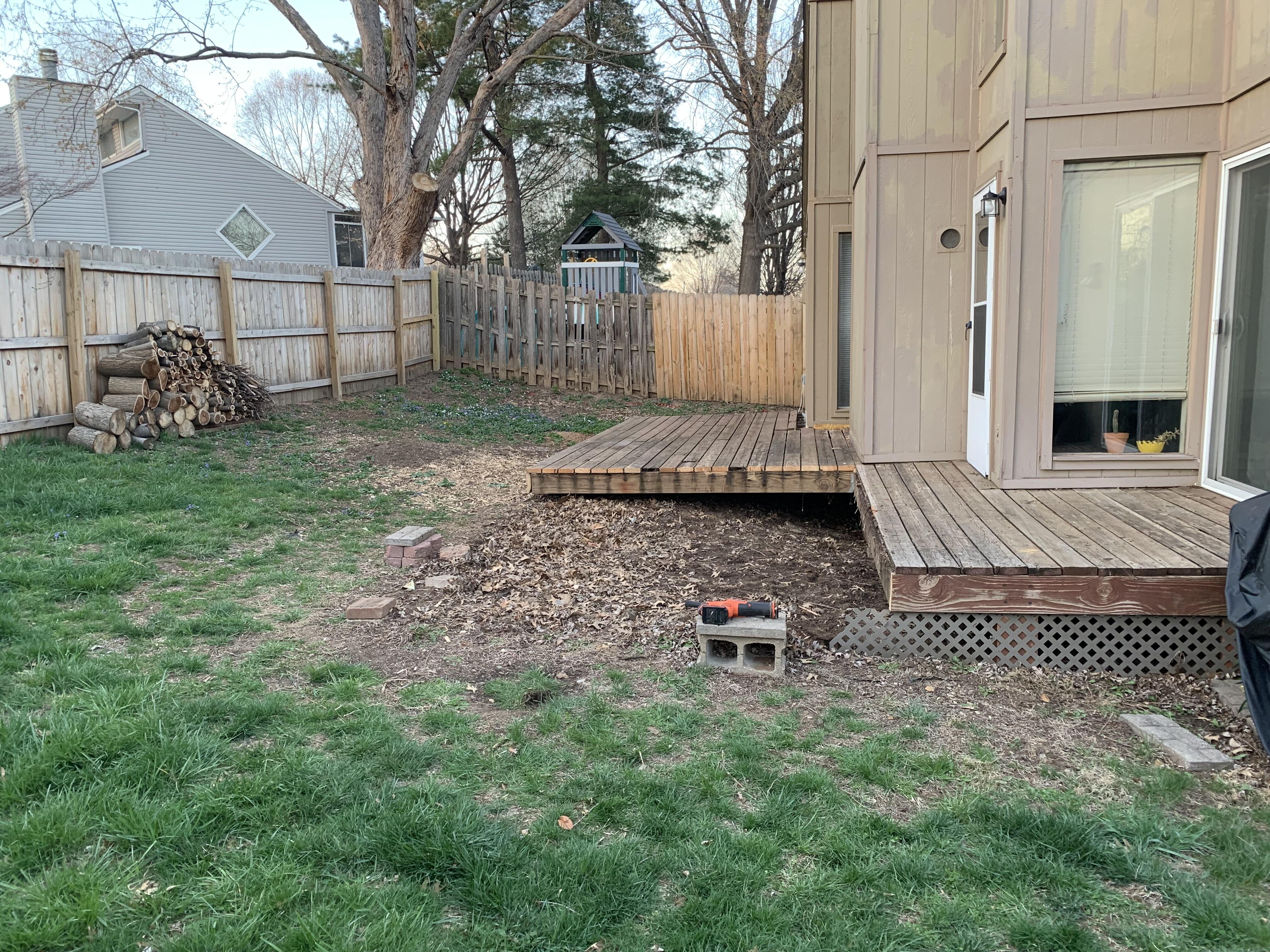
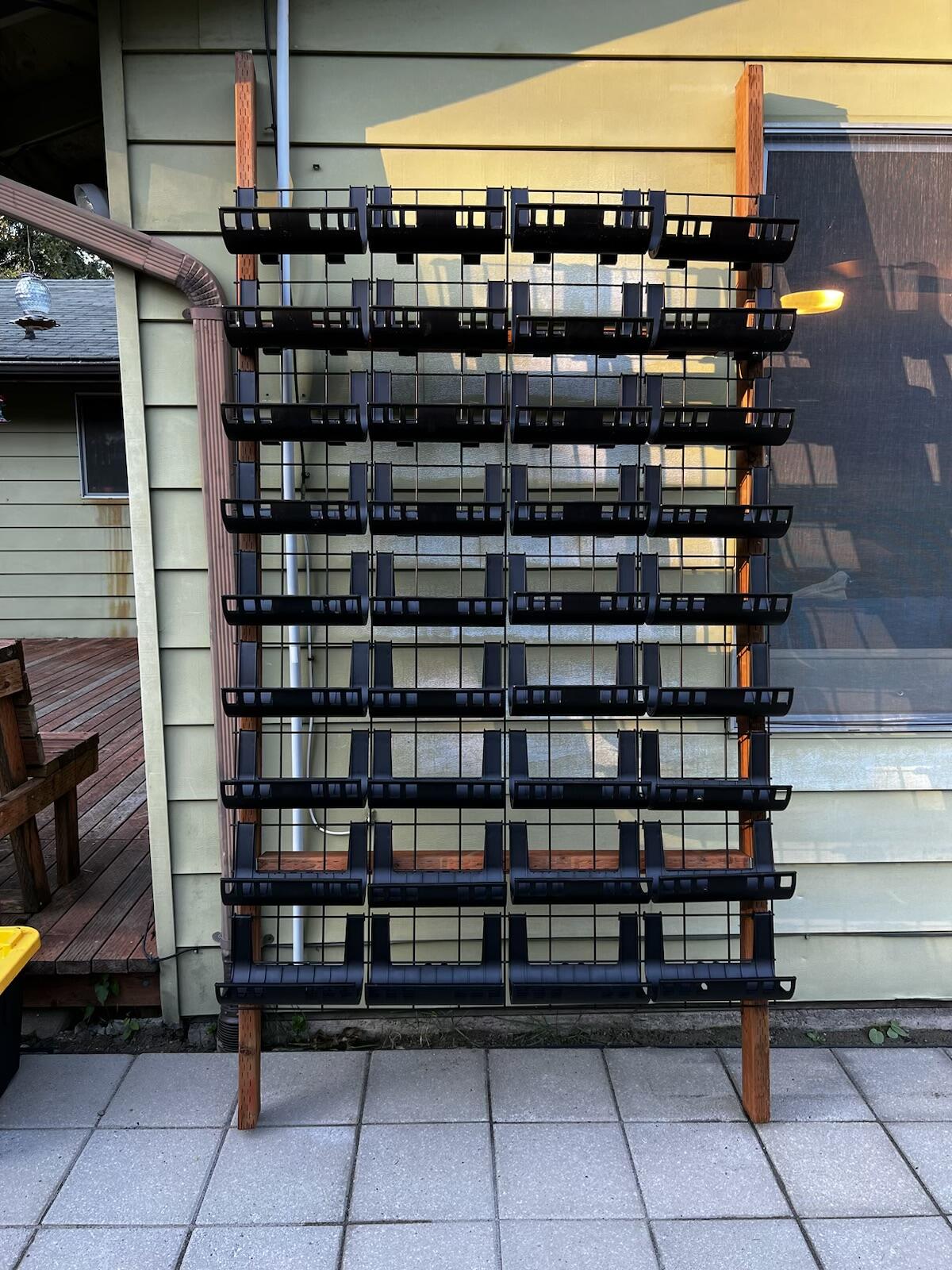
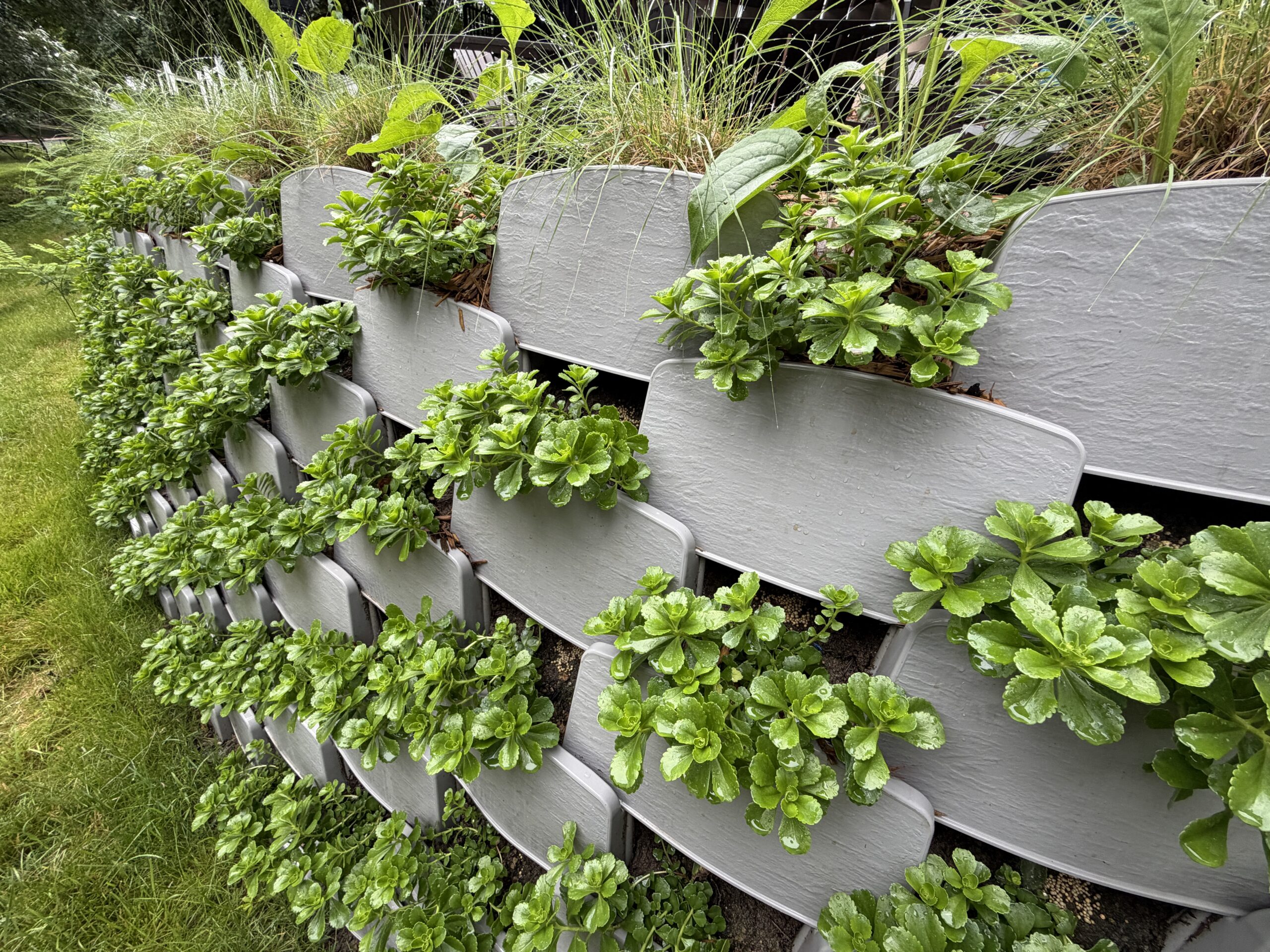
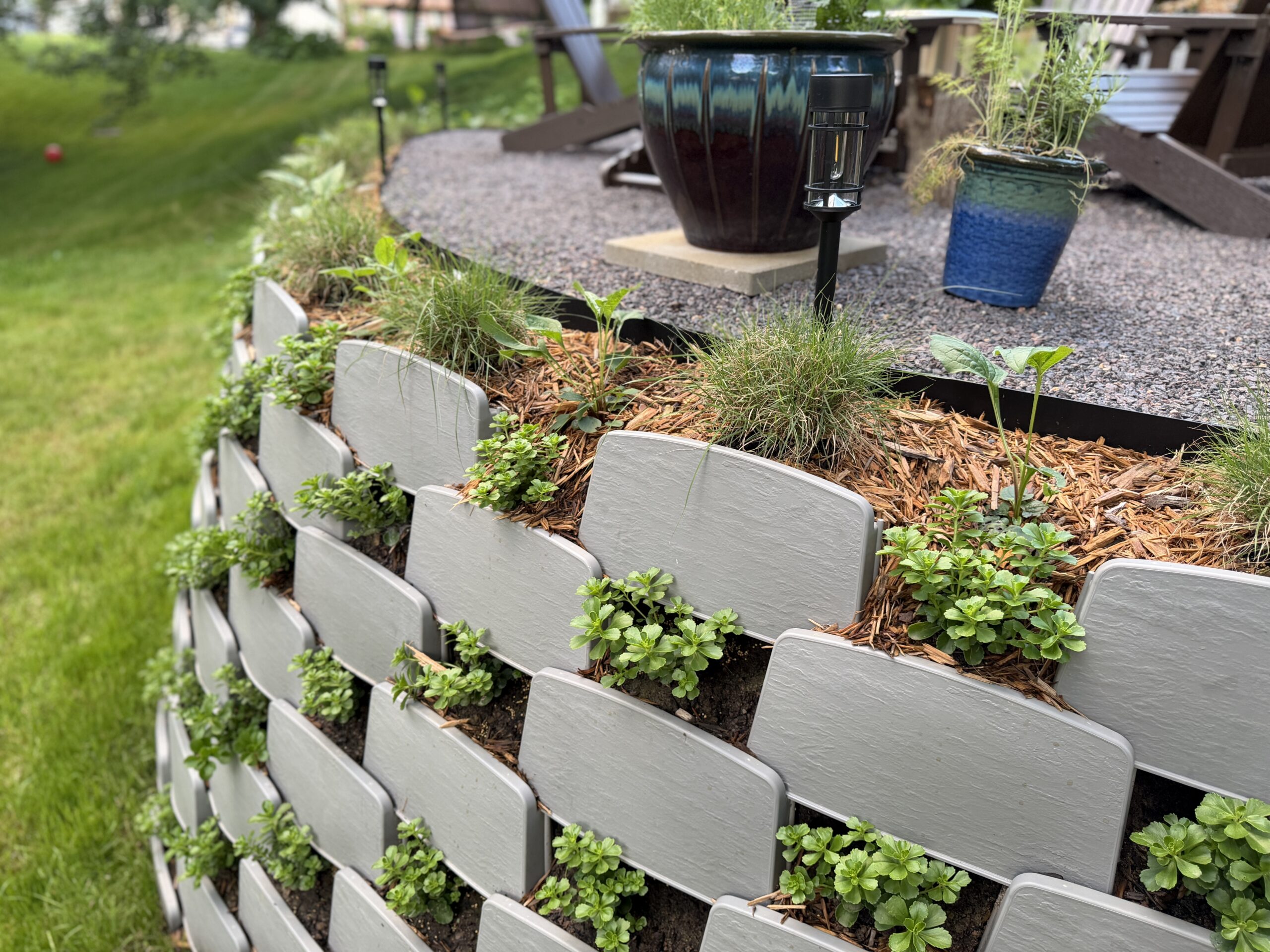
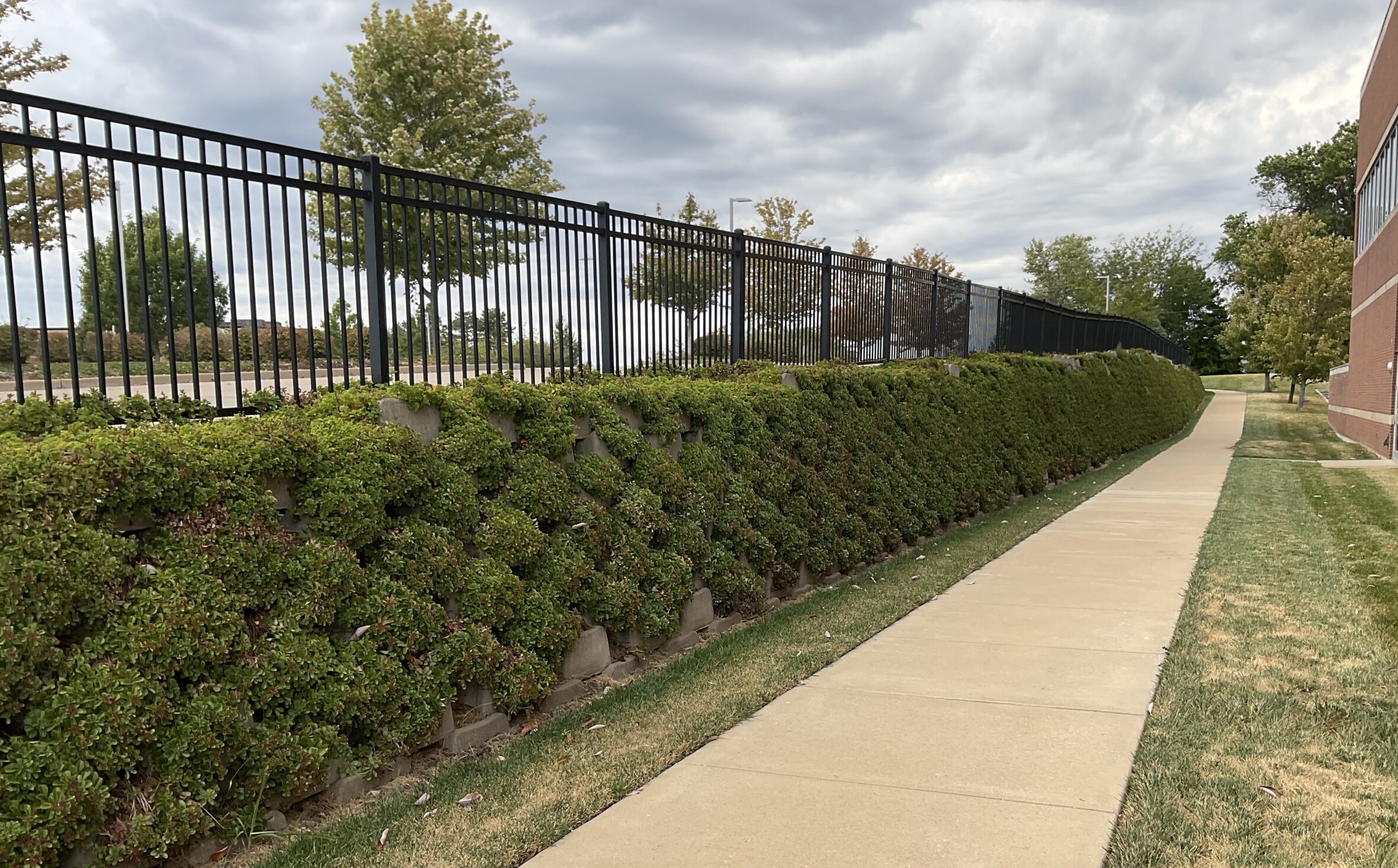
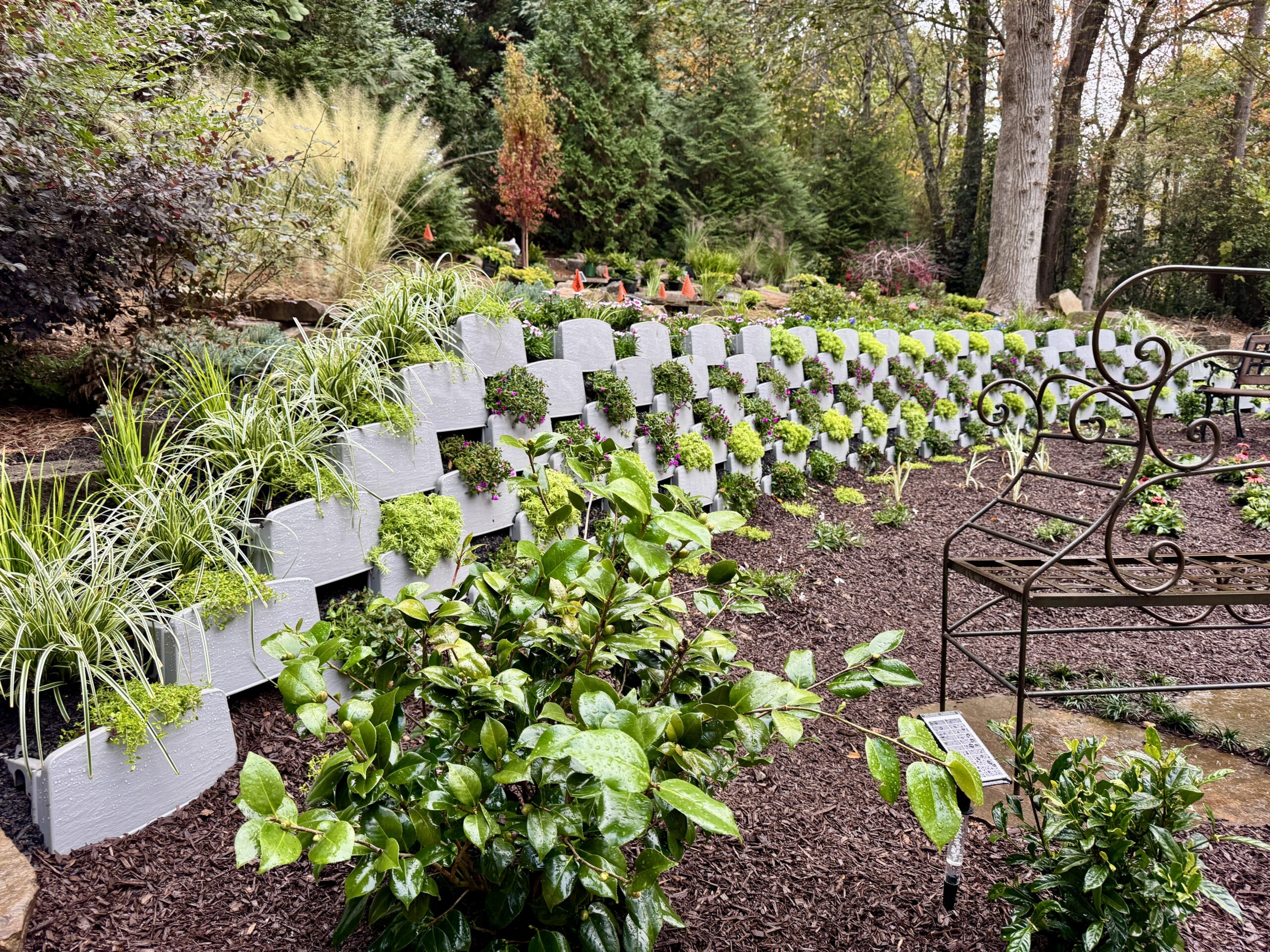
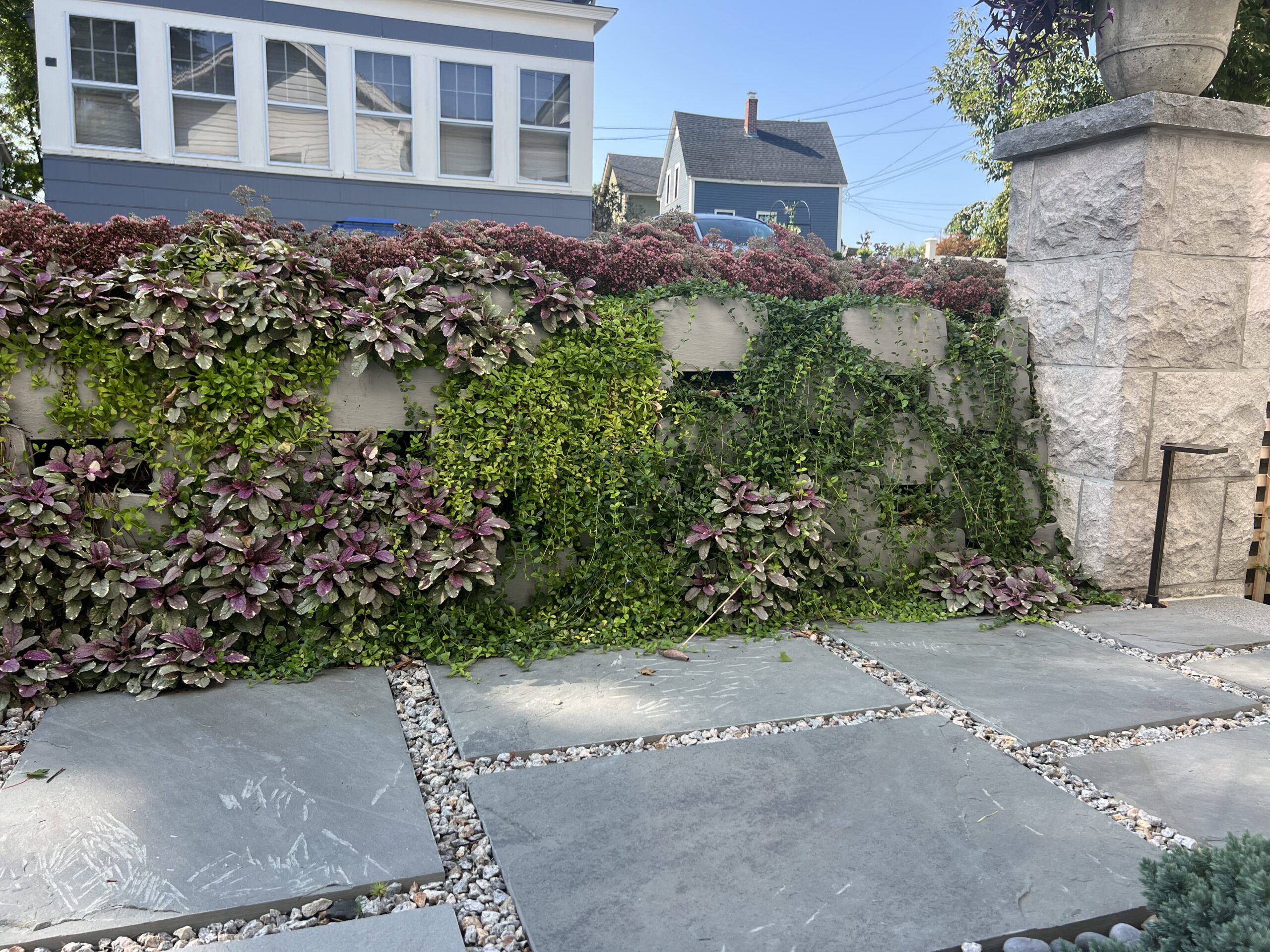
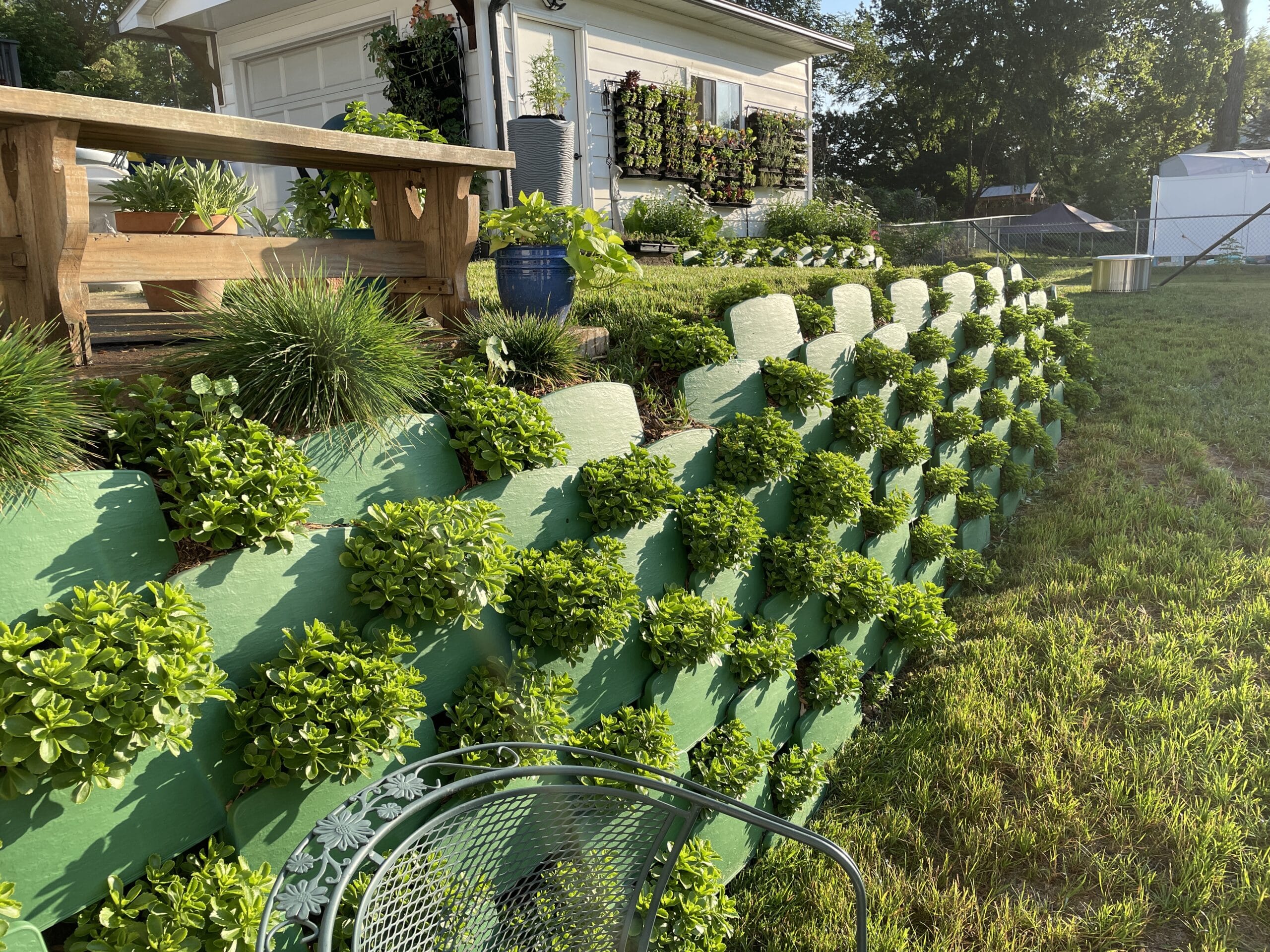
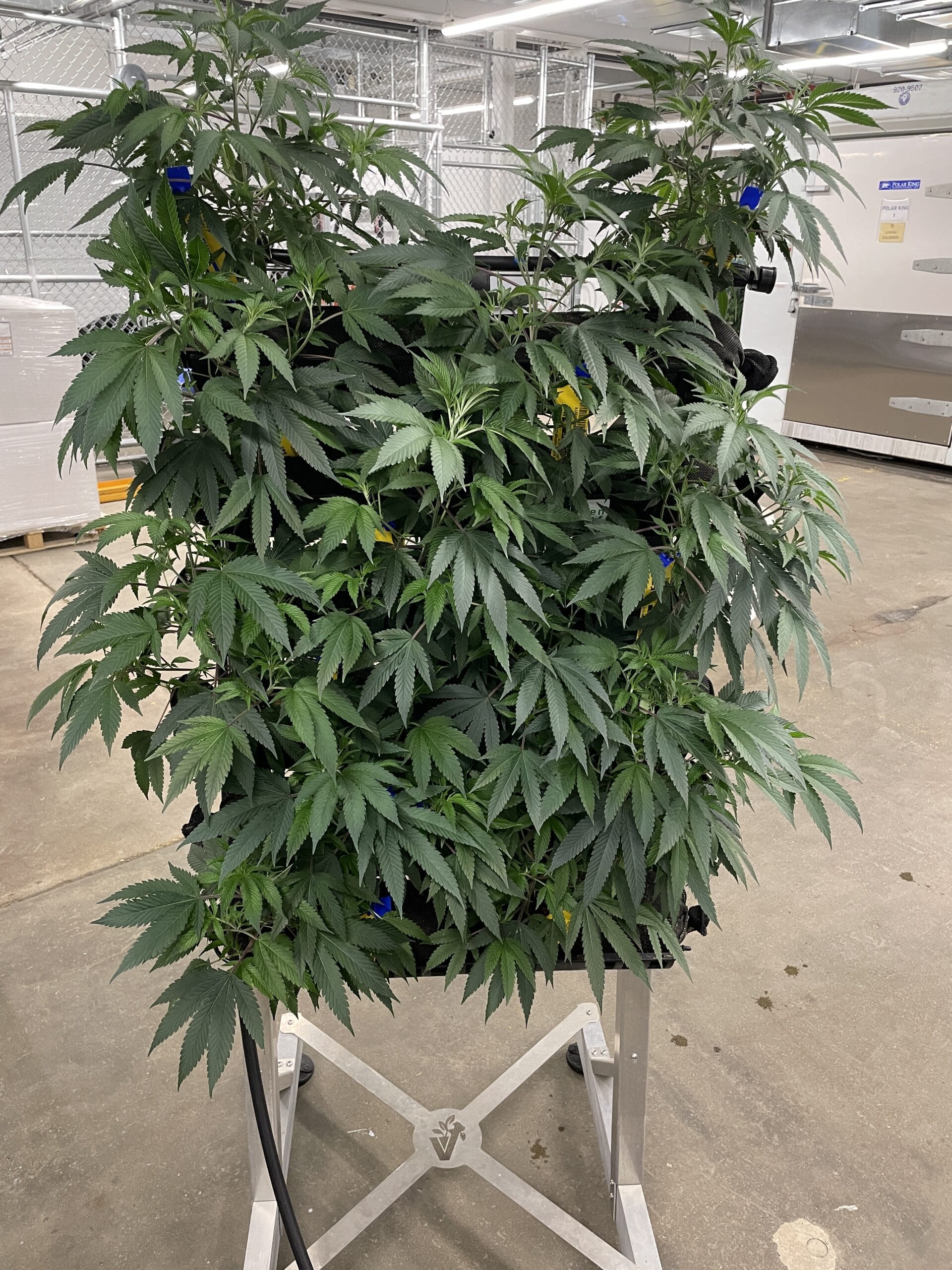
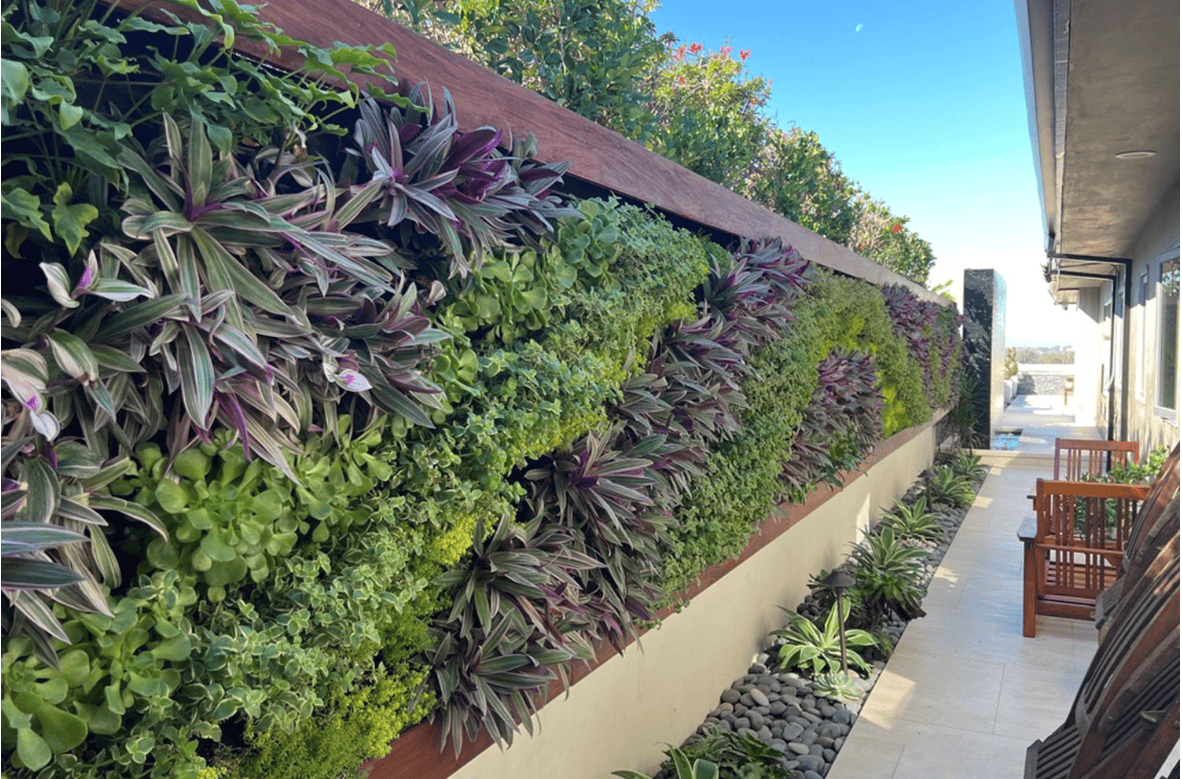
This is exactly why hardscape-heavy neighborhoods feel hotter at night than the surrounding countryside, even though the two areas received the same sunshine during the day. The EPA notes that heat islands build throughout the day and become most pronounced after sunset, due to the slow release of heat from urban materials. California’s EPA puts real numbers behind it: daytime urban temperatures average 16º F higher than nearby rural areas, but nighttime temperatures can run as much as 22º F higher as buildings and pavement slowly give up their stored heat. Research on paved surfaces has measured concrete and asphalt hitting 36º-54º F hotter than the surrounding air on a hot day, heat that has to go somewhere once the sun goes down. The pictures below show some attractive typical examples. See if you can pick out the Non-Heat Accumulator?
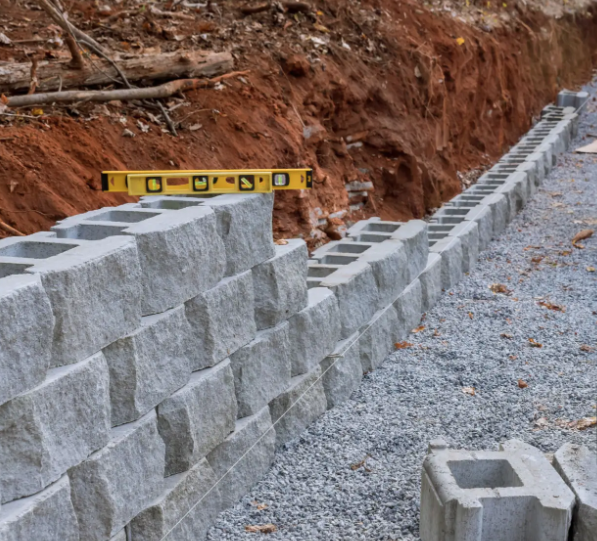
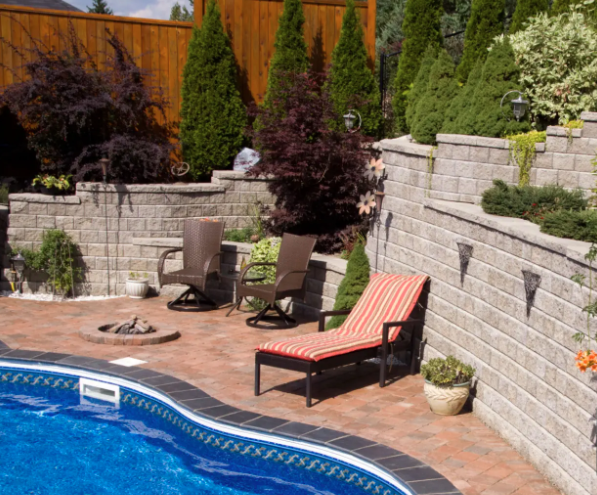
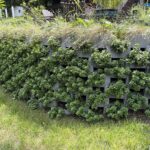
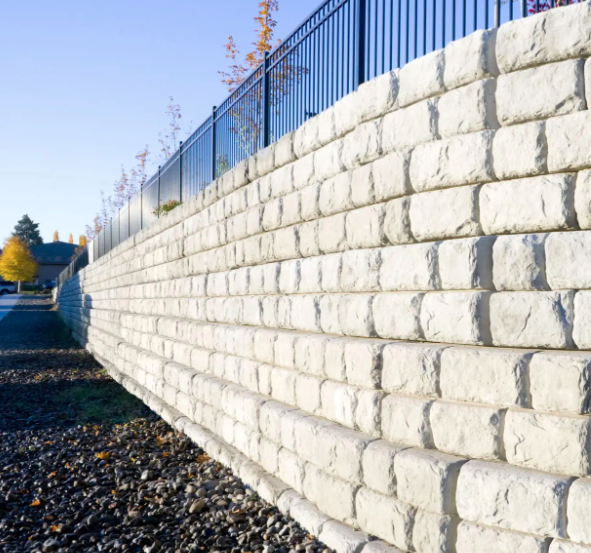
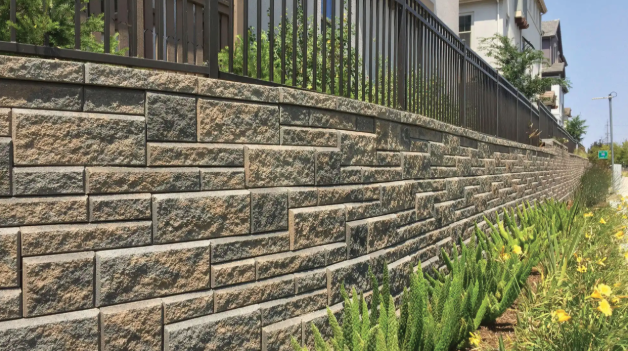
Traditional segmental concrete retaining wall blocks, the market leader for landscape and site retaining walls, behave exactly like any other slab of concrete in this respect. Their moderate-to-low solar reflectance (albedo) and high heat storage capacity mean they contribute to the same day-absorb, night-release cycle as sidewalks, driveways, and parking lots. Multiply that across every linear foot of a retaining wall, and a concrete wall system becomes a genuine, if easy to overlook, contributor to a warmer yard, warmer streetscape, and warmer neighborhood.
That warmth isn’t free, either. For every 1º F rise in air temperature, electricity demand for cooling climbs by roughly 1.5 – 2%, and across 93 European cities, urban heat islands are estimated to cause roughly 6,700 premature deaths per year, about 4% of all summer deaths, with risk rising sharply once temperatures pass 86º F. Heat islands are a real cost, paid in energy bills and public health, and hardscape materials are a big part of the reason why.
A planted wall behaves like a plant, not like a slab
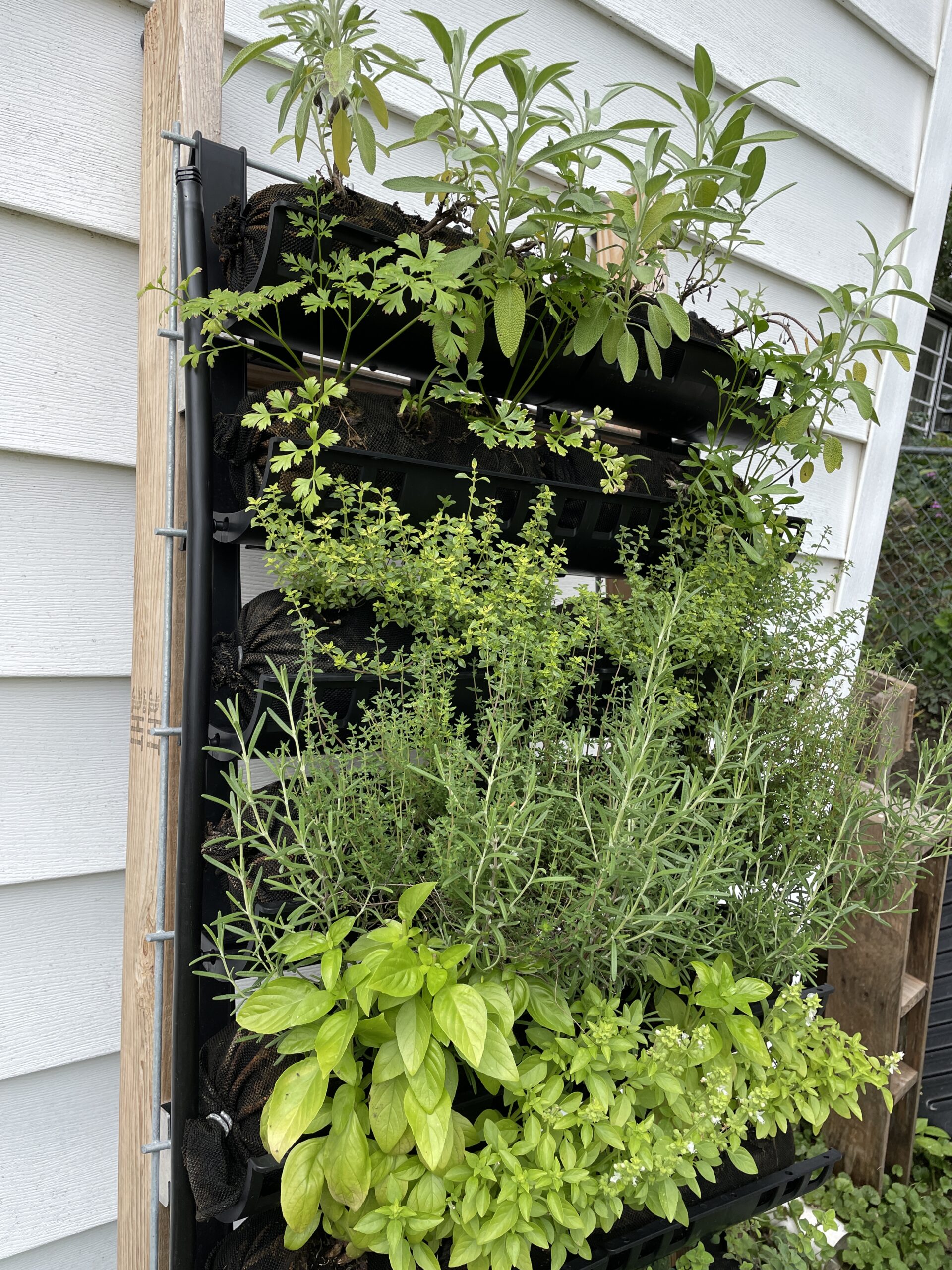
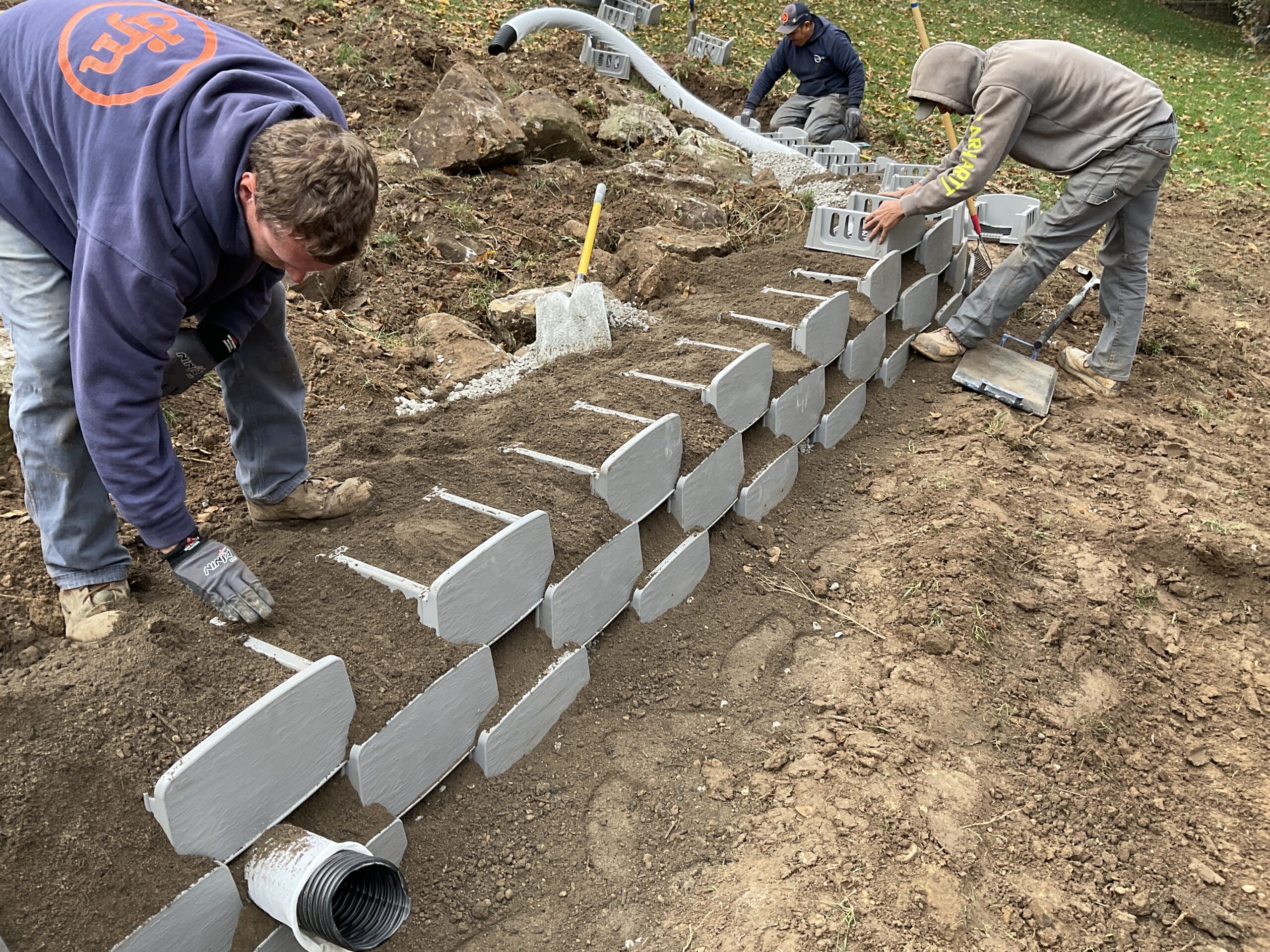
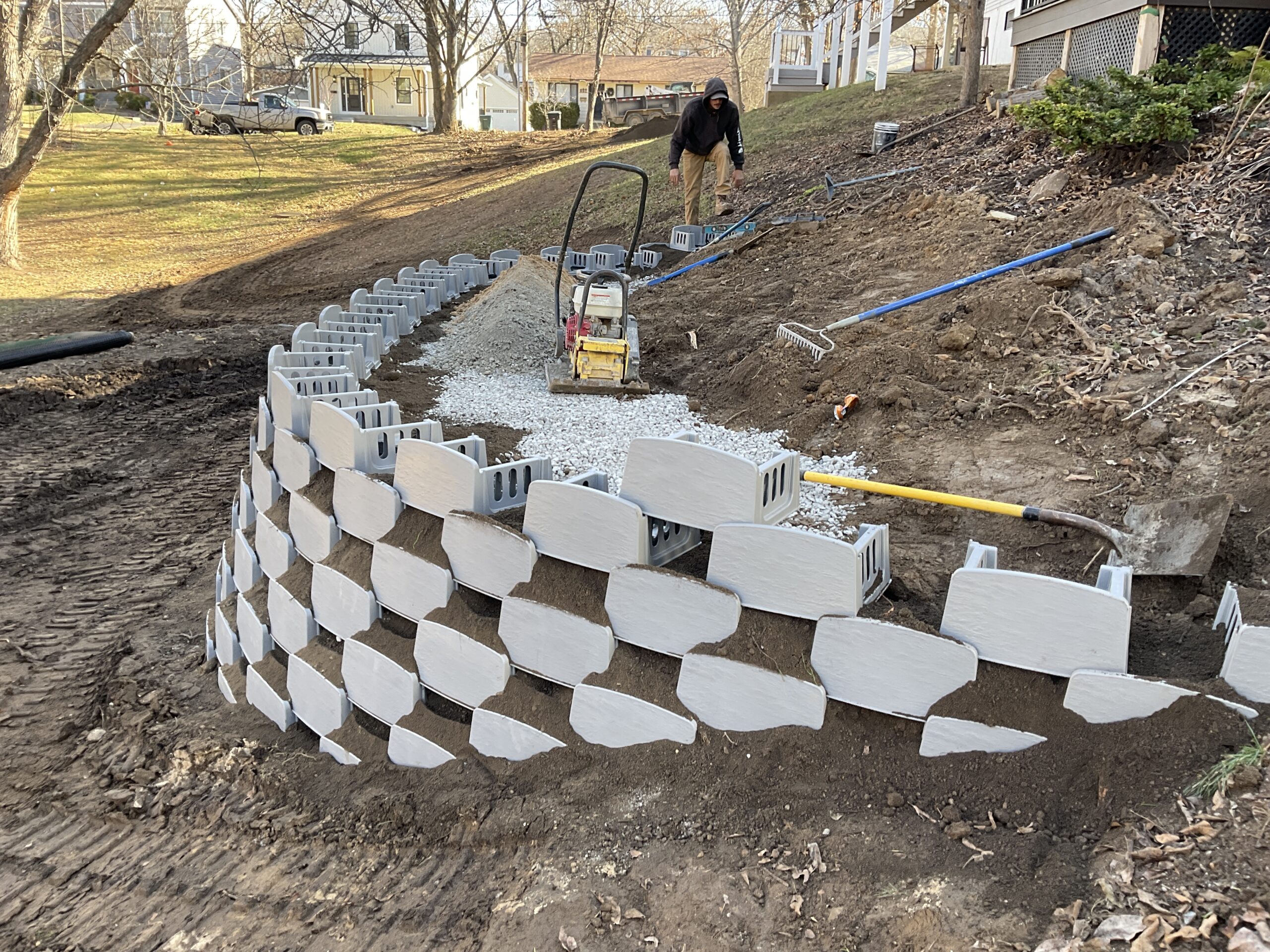
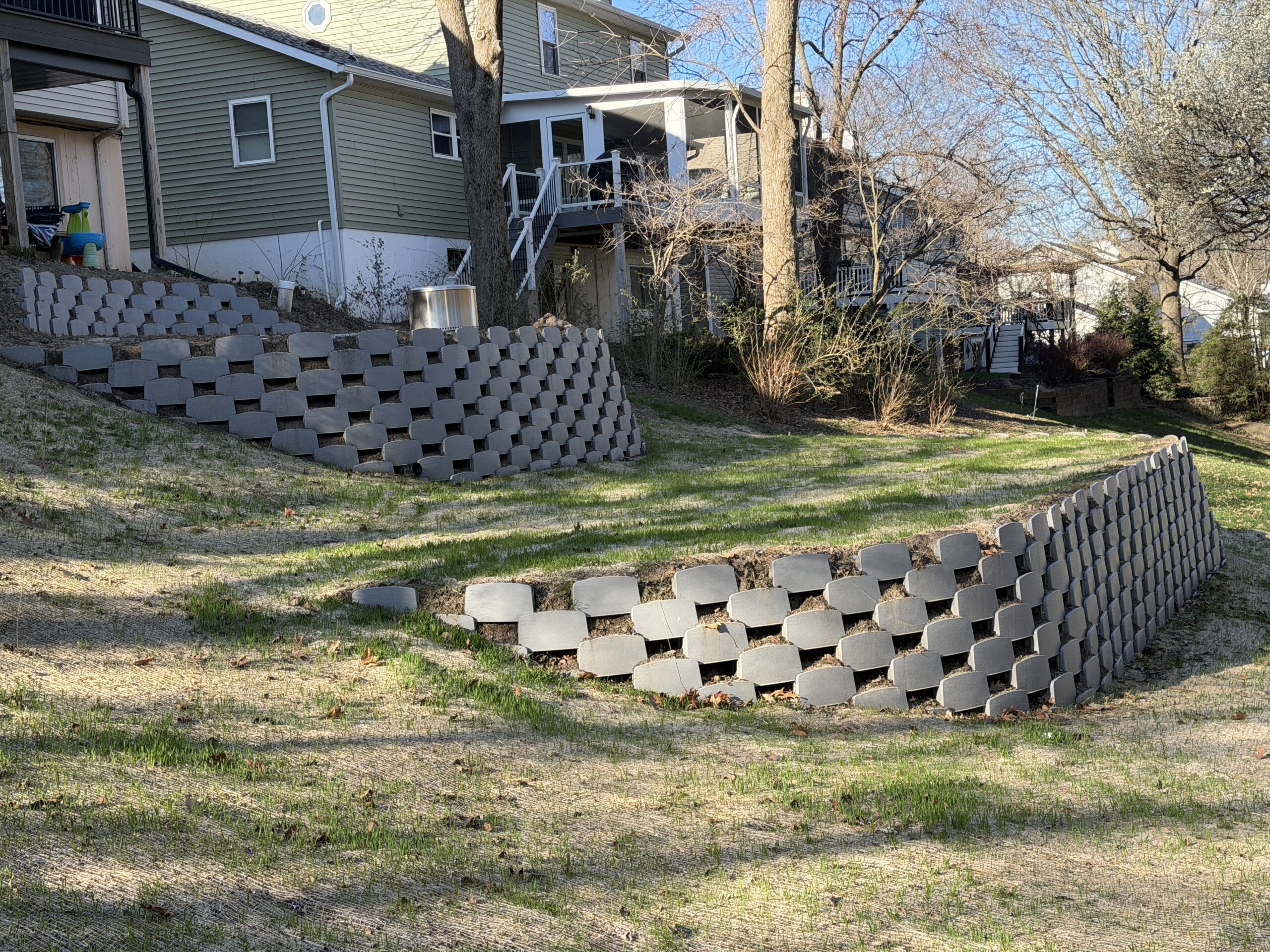
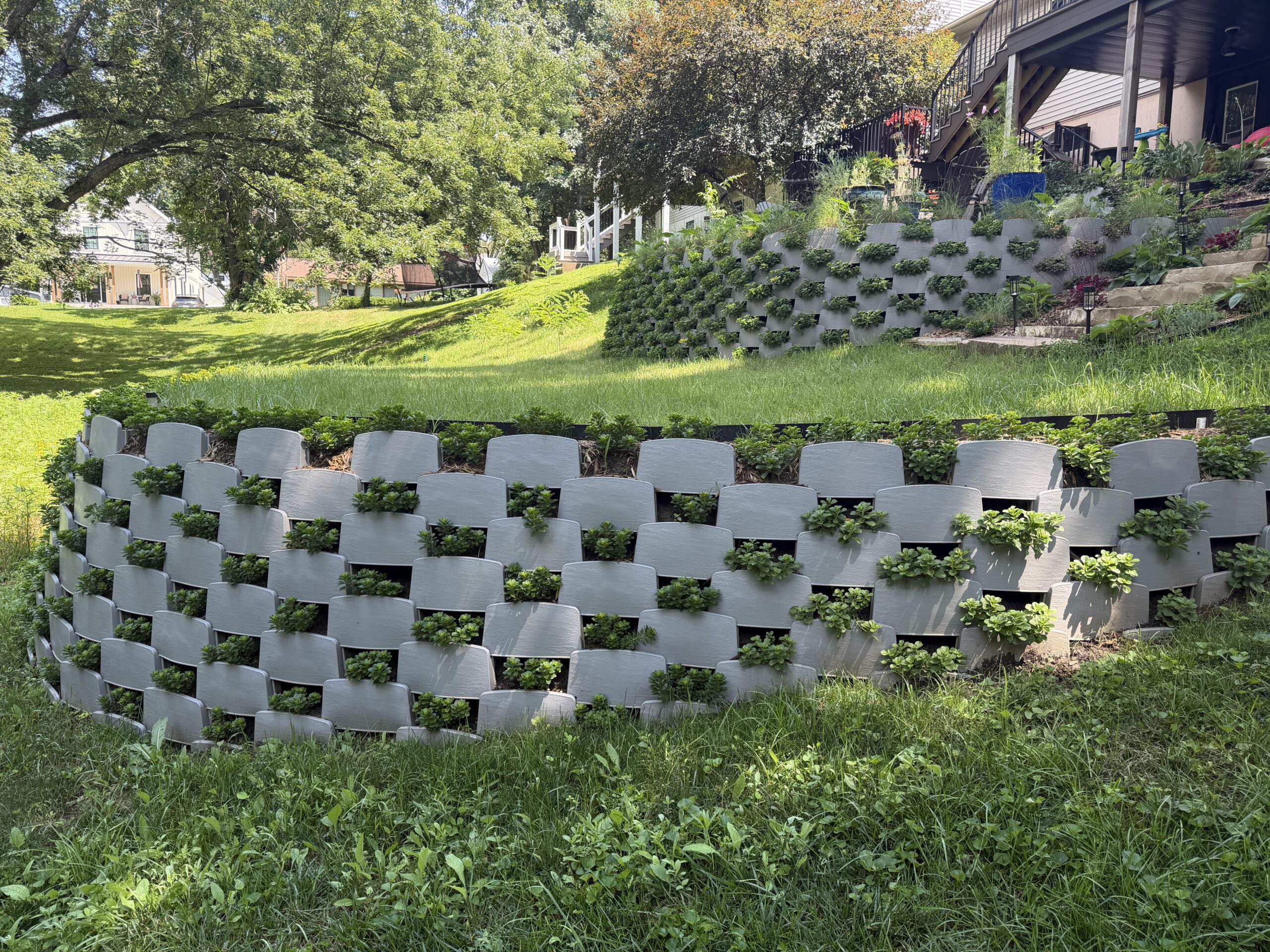
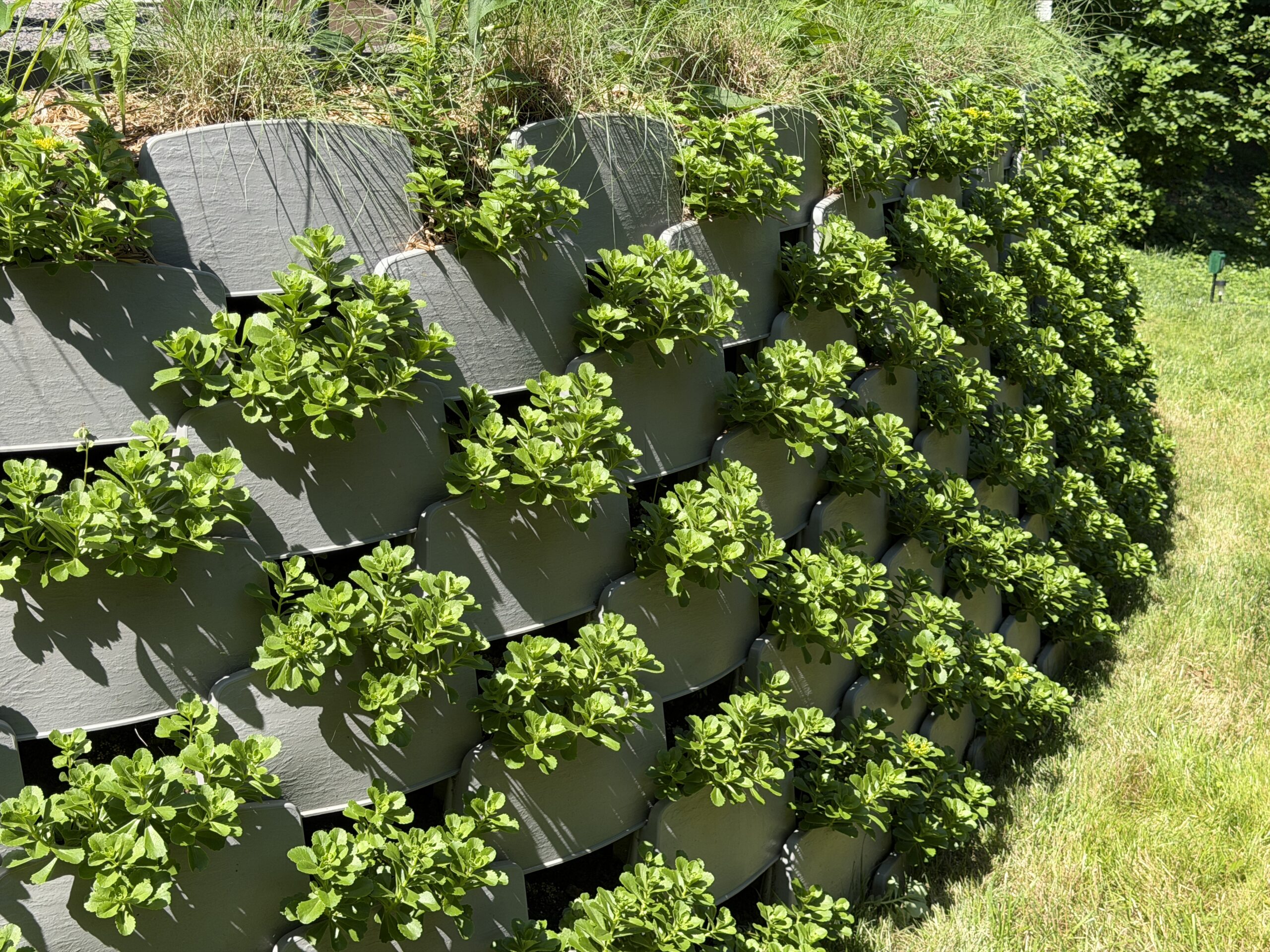
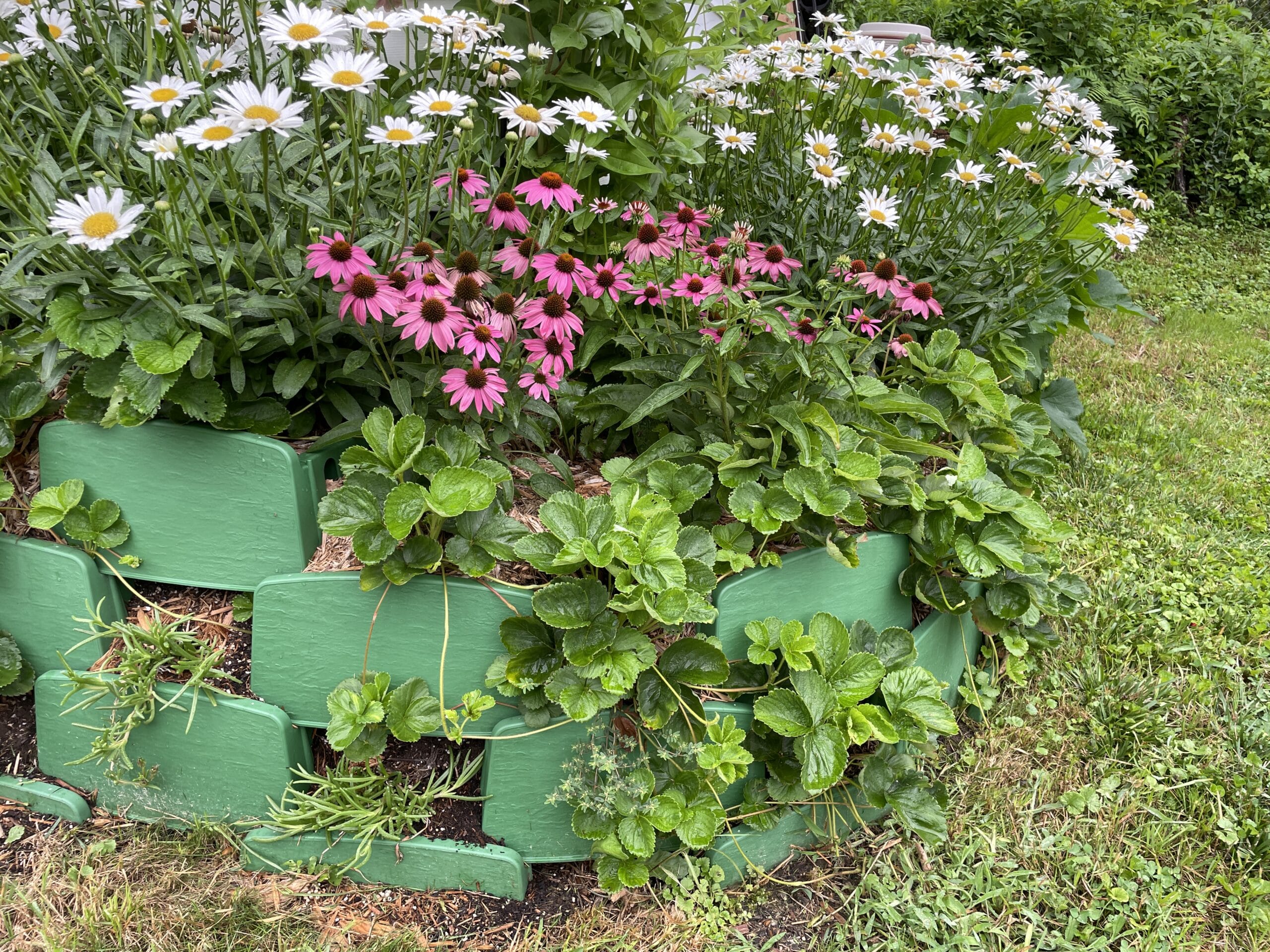
This is where a Varden™ plantable retaining wall works fundamentally differently. Instead of presenting a bare, heat-absorbing concrete face to the sun, a Varden wall is designed to be filled with soil and planted, so that within a season or two the visible surface is living foliage rather than exposed hardscape. That distinction matters more than it might seem, because vegetated surfaces respond to sunlight in a completely different way than concrete: leaves reflect and transmit a large share of incoming solar radiation, and plants cool themselves and their surroundings through evapotranspiration, rather than storing that energy as heat.
The research on vegetated walls and green facades backs this up with real numbers. A detailed field study of a direct green facade in Nanjing found that the vegetated surface reduced ambient air temperature by about 6º F and cut wall surface temperatures by an average of roughly 4.6º F, climbing to a maximum reduction of about 8.4º F during the hottest part of the day, while blocking roughly 89% of the solar radiation that would otherwise strike the wall face directly.
A broader review of living wall studies compiled even larger swings: living walls have been measured reducing exterior surface temperatures by up to 37º F in Wuhan, 29º F in Hong Kong, 18º F in Singapore, and up to 36º F in parts of Italy, compared with a conventional bare wall in the same location. At the scale of a full urban block, that same study modeled living walls lowering the surrounding ambient air temperature by an average of roughly 2.4º F and up to 4.1º F, translating into cooling-energy savings as high as 15% for nearby buildings, and other researchers have measured cooling-load reductions of up to 31%.
None of these studies were run on Varden™ blocks specifically — they’re independent research on vegetated walls and green façades generally — but the mechanism is the same one at work in every Varden™ installation. Foliage intercepts the sun before it ever reaches the structural material underneath, and the soil and plants filling each pocket lose heat through evapotranspiration rather than storing it. A planted Varden™ wall stays close to ambient temperature during the day and has little stored heat to release at night, instead of functioning as a small thermal battery the way a bare concrete wall does.
See the research sources cited in this document, housed in our Support Docs section at this link.
More than a cooler wall
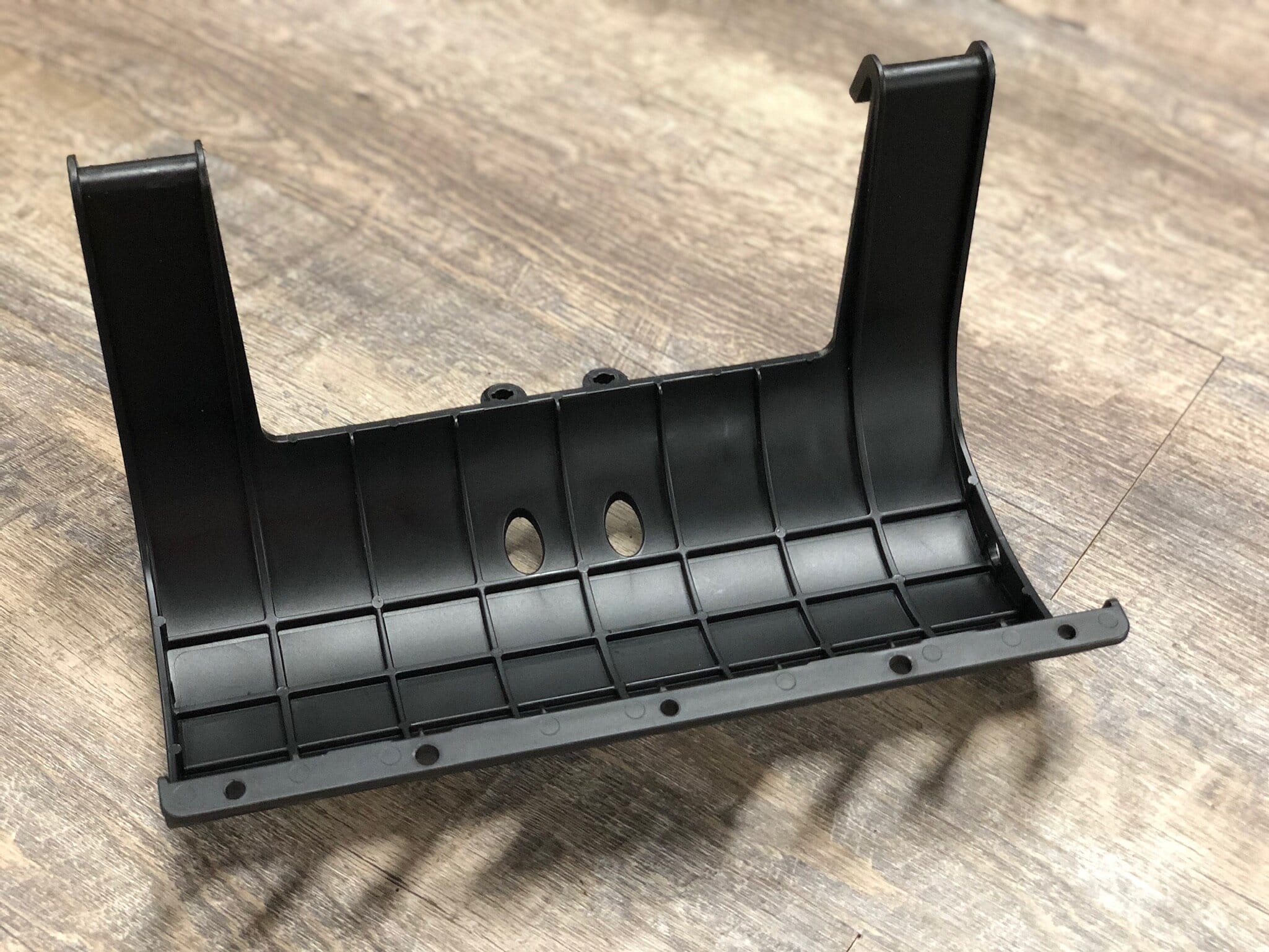
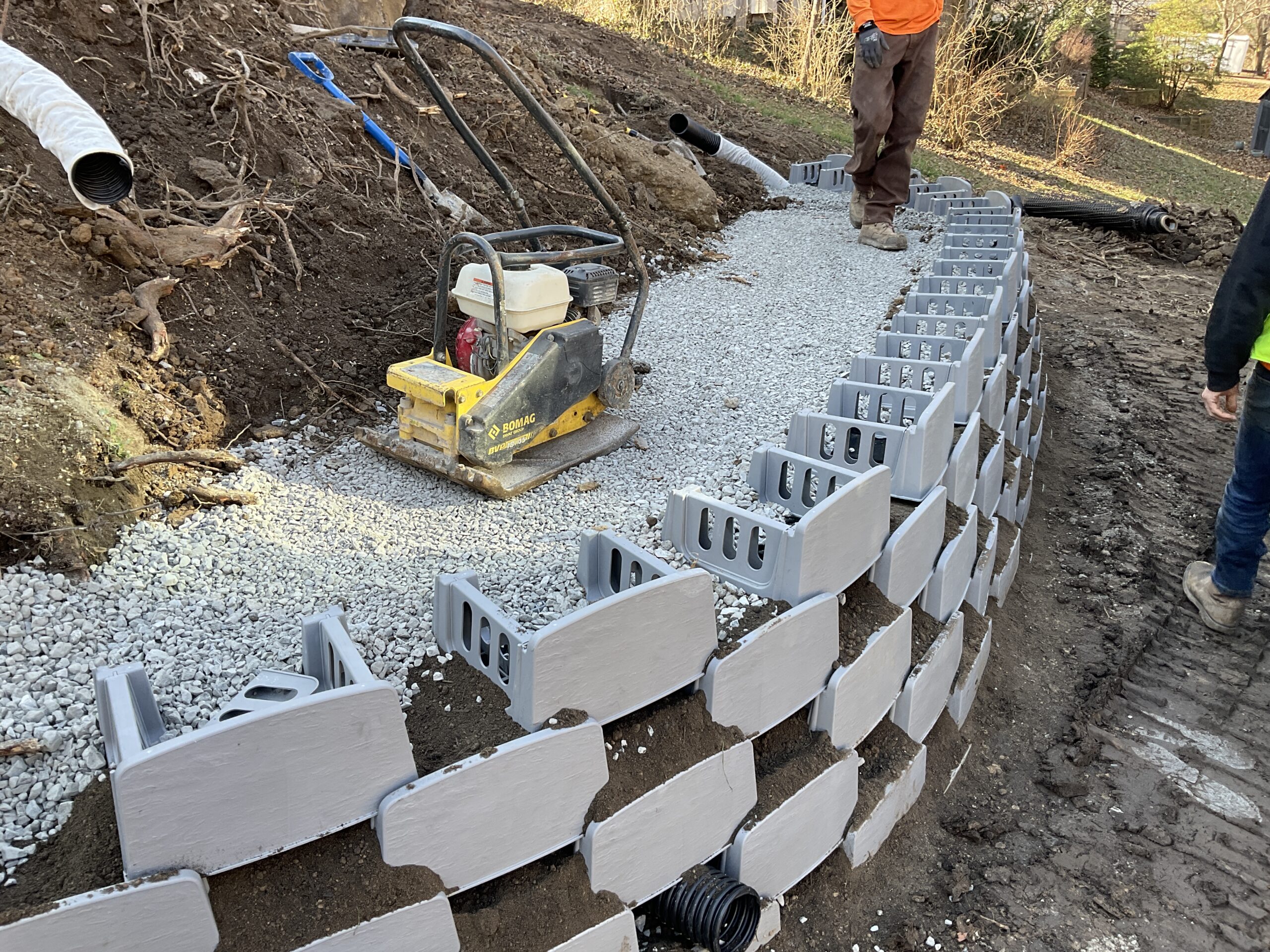
The heat island story is really just one piece of a bigger picture. Varden™ blocks are injection-molded from structural-grade polypropylene, at roughly 3 pounds per square foot of finished wall, a fraction of the weight of concrete units doing the same job, which means far less fuel burned trucking material to the job site. Every pocket is designed to be filled with soil or compost and planted, so the finished wall also functions as a small carbon sink and a habitat surface, not just a retaining structure. See how Varden Blocks stack up environmentally to concrete modular blocks here.
Because the blocks are buried and their faces shielded from UV by the very vegetation they support, a properly engineered Varden™ wall is designed to perform for up to 100 years or more, backed by a 2-year warranty on the block products themselves against manufacturing defects. For architects, landscape architects, and engineers pursuing LEED or other green building certifications, a vegetated retaining wall system like Varden™ can support project goals around embodied carbon reduction, stormwater management, and, as this research shows, heat island mitigation, when documented appropriately as part of an overall site strategy.
Concrete isn’t going away, and there will always be applications where it’s the right structural choice.
But when the goal is a retaining wall that doesn’t add to the heat load of a backyard, a streetscape, or a neighborhood, the science is clear: a planted, living wall face behaves like the landscape it’s part of, not like a slab of pavement. That’s the difference a Varden™ wall is built to make.
Learn more about Varden™ plantable retaining wall blocks at www.verdtech.com
Share This Story, Choose Your Platform!
Related Posts
About the Author: Mark Woolbright